8888888888888888888888888888888888888888888888888888888888888888888888888888888888888888888888888888888888888888888888888888888888888888888888888888888888888888888888
 Collins with the Brooklyn Nets in 2014 | |
| Personal information | |
|---|---|
| Born | December 2, 1978 Northridge, California, U.S. |
| Died | May 12, 2026 (aged 47) Los Angeles, California, U.S. |
| Listed height | 7 ft 0 in (2.13 m) |
| Listed weight | 255 lb (116 kg) |
| Career information | |
| High school | Harvard-Westlake (Los Angeles, California) |
| College | Stanford (1997–2001) |
| NBA draft | 2001: 1st round, 18th overall pick |
| Drafted by | Houston Rockets |
| Playing career | 2001–2014 |
| Position | Center |
| Number | 35, 34, 98, 46 |
| Career history | |
| 2001–2008 | New Jersey Nets |
| 2008 | Memphis Grizzlies |
| 2008–2009 | Minnesota Timberwolves |
| 2009–2012 | Atlanta Hawks |
| 2012–2013 | Boston Celtics |
| 2013 | Washington Wizards |
| 2014 | Brooklyn Nets |
| Career highlights | |
| |
| Career NBA statistics | |
| Points | 2,621 (3.6 ppg) |
| Rebounds | 2,706 (3.7 rpg) |
| Assists | 626 (0.9 apg) |
8888888888888888888888888888888888888888888888888888888888888888888888888888888888888888888888888888888888888888888888888888888888888888888888888888888888888888888888
Jason Collins, NBA's first openly gay player, dies of brain cancer at 47
Collins announced his diagnosis of stage 4 glioblastoma in December

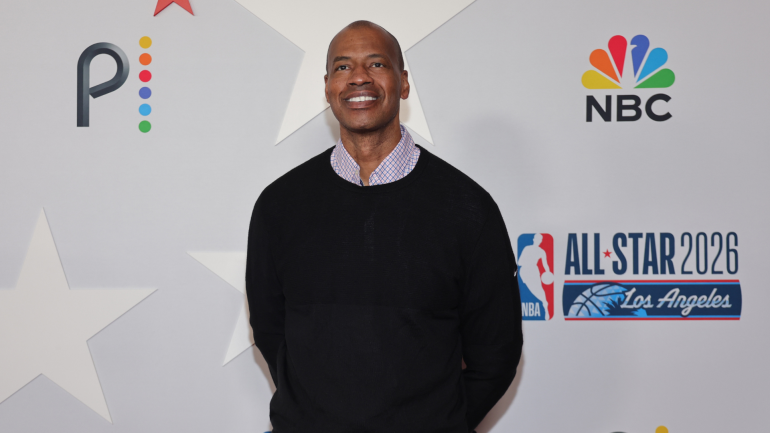
Jason Collins, the first openly gay NBA player, has died of brain cancer at 47, his family announced Tuesday. Collins, a 7-foot center who played for six different teams across 13 seasons, disclosed his diagnosis of stage 4 glioblastoma in December.
"We are heartbroken to share that Jason Collins, our beloved husband, son, brother and uncle, has died after a valiant fight with glioblastoma," Collins' family said in a statement. "Jason changed lives in unexpected ways and was an inspiration to all who knew him and to those who admired him from afar. We are grateful for the outpouring of love and prayers over the past eight months and for the exceptional medical care Jason received from his doctors and nurses. Our family will miss him dearly."
In an open letter published by ESPN in December, Collins shared that he had difficulty focusing, was struggling to complete simple tasks due to brain fog, and that his short-term memory was declining. That led him to undergo a CT scan at UCLA, which uncovered the brain tumor.
Glioblastoma is a common form of brain cancer that spreads aggressively and quickly. Collins had been undergoing radiation to slow the growth of the tumor, as well as chemotherapy in Singapore at a facility that specializes in fighting the specific type of tumor he had. The treatment in Singapore helped to the extent that Collins was able to return home and attend NBA All-Star Weekend back in February. However, the cancer returned recently, and he died at his home surrounded by his family.

Collins became a trailblazer in sports when he came out in 2013. He announced in a Sports Illustrated essay that he was gay, making him not just the first active openly gay player in NBA history, but the first across all four major North American sports leagues. Collins, the No. 18 overall pick out of Stanford in 2001, retired in 2014 after stints playing for the New Jersey Nets, Memphis Grizzlies, Minnesota Timberwolves, Atlanta Hawks, Boston Celtics, Washington Wizards and then a second stop with the Nets (who by then had moved to Brooklyn) after his announcement.
NBA commissioner Adam Silver said Collins' "impact and influence extended far beyond basketball."
"He helped make the NBA, WNBA and larger sports community more inclusive and welcoming for future generations," Silver said in a statement. "He exemplified outstanding leadership and professionalism throughout his 13-year NBA career and in his dedicated work as an NBA Cares Ambassador. Jason will be remembered not only for breaking barriers, but also for the kindness and humanity that defined his life and touched so many others. On behalf of the NBA, I send my heartfelt condolences to Jason's husband, Brunson, and his family, friends and colleagues across our leagues."
8888888888888888888888888888888888888888888888888888888888888888888888888888888888888888888888888888888888888888888888888888888888888888888888888888888888888888888888
Jason Paul Collins (December 2, 1978 – May 12, 2026) was an American professional basketball player who was a center for 13 seasons in the National Basketball Association (NBA). He played college basketball for the Stanford Cardinal, earning third-team All-American honors in 2001. Collins was selected by the Houston Rockets in the first round of the 2001 NBA draft with the 18th overall pick.[1] He went on to play for the New Jersey Nets, Memphis Grizzlies, Minnesota Timberwolves, Atlanta Hawks, Boston Celtics, Washington Wizards, and Brooklyn Nets.
After the 2012–13 NBA season concluded, Collins publicly came out as gay.[2] He became a free agent and did not play again until February 2014, when he signed with the Nets and became the first publicly gay athlete to play in any of the four major North American pro sports leagues.[3] In 2014, Collins was featured on the cover of Time's "100 Most Influential People in the World".[4] He died of glioblastoma on May 12, 2026, at the age of 47.[5]
Early life
Collins was born in Los Angeles, California, in the Northridge neighborhood. He was born eight minutes ahead of his twin brother, Jarron, who also became an NBA player.[6][7]
Both brothers graduated from Harvard-Westlake School in Los Angeles.[8] He and Jarron won two California Interscholastic Federation state titles during their four-year careers with a combined record of 123–10. Collins broke the California career rebounding record with 1,500.[9][10] Collins was backed up by future actor Jason Segel, who USA Today opined might have ended up being the most famous player from the team.[11]
College career
Collins played at Stanford University with brother Jarron for the Cardinal in the Pacific-10 Conference (Pac-10).[6][12] As a freshman in 1997–98, Collins played just one game before injuring his knee and missing the rest of the season. Stanford advanced to the Final Four that season for the first time since 1942. After playing only eight games in his first two seasons, Collins appeared in 31 games, starting in 11, as a junior in 1999–2000. He averaged 8.3 points and 6.1 rebounds to help the Cardinal tie for a Pac-10 title and earn a No. 1 seed in the 2000 NCAA tournament.[13]
As a senior in 2000–01, Collins averaged 14.5 points and 7.8 rebounds.[13] He was named to the All-Pac-10 first team,[14] and the National Association of Basketball Coaches (NABC) voted him to their third-team All-American team.[15] Stanford won the Pac-10 championship and reached the Elite Eight in the 2001 NCAA tournament.[13] He finished his college career ranked first in Stanford history for field goal percentage (.608) and third in blocked shots (89).[16]
Professional career
New Jersey Nets (2001–2008)
As a rookie along with Richard Jefferson, Collins played a significant role in the New Jersey Nets' first-ever NBA Finals berth in 2002 against the Los Angeles Lakers. During this Finals appearance, Collins acknowledged that he is not really 7 feet tall as he has been listed since his junior year of college.[17] He was measured 6 ft 10¼ in at the 2001 NBA combine.[18]
In the 2002–03 NBA season Collins took over the starting center role for the Nets and helped the franchise back to the NBA Finals.[19] During that season, Collins averaged 5.7 points and 4.5 rebounds per game. Prior to the 2004–05 season, he signed a $25 million contract extension with New Jersey for five more years.[20]
Memphis Grizzlies (2008)
On February 4, 2008, Collins was traded along with cash considerations to the Memphis Grizzlies for Stromile Swift.[21]
Minnesota Timberwolves (2008–2009)
On June 26, 2008, Collins was dealt to the Minnesota Timberwolves in an eight-player deal involving Kevin Love and O. J. Mayo.[22]
Atlanta Hawks (2009–2012)
Collins signed with the Atlanta Hawks on September 2, 2009.[23] Collins re-signed with the Hawks in the 2010 offseason.[24] In 2010–11, the fifth-seeded Hawks defeated the fourth-seeded Orlando Magic as Collins slowed the Magic's dominant center, Dwight Howard. After Game 4 in the series, then-Orlando coach Stan Van Gundy called Collins's play "the best defense on [Howard] all year".[25]
Boston Celtics (2012–2013)

On July 31, 2012, Collins signed a contract with the Boston Celtics.[26][27] He averaged 10.3 minutes in 32 games with Boston, starting in 7.[28]
Washington Wizards (2013)
On February 21, 2013, Collins and Leandro Barbosa were traded to the Washington Wizards in exchange for Jordan Crawford.[29][30]
On April 29, 2013, after the season had already concluded, Collins publicly came out as gay, becoming the first active male athlete from one of the four major North American professional team sports to publicly do so.[31][32] Collins became a free agent in July 2013, and stated that he intended to pursue another contract.[33] He was not invited by any team to training camp, but he worked out at his home waiting for an opportunity.[32][3]
Return to the Nets (2014)
On February 23, 2014, Collins signed a 10-day contract to rejoin the Nets, who had since moved to Brooklyn.[34] Nets coach Jason Kidd, who became good friends with Collins while teammates in New Jersey from 2001 to 2008, was an advocate of signing Collins.[3][35] Collins played 11 minutes that night against the Lakers at the Staples Center, becoming the first publicly gay athlete to play in any of the four major North American professional sports leagues.[36][37][38] Collins wore jersey number 46 (the only number the team had available at the time) in his first game of the season, but planned to wear No. 98—the same number he wore with Boston and Washington—going forward.[3] Collins chose to wear No. 98 in honor of Matthew Shepard, whose 1998 murder was widely reported as a hate crime and ultimately led to the passage of the Matthew Shepard and James Byrd Jr. Hate Crimes Prevention Act.[39] Collins's jersey rose to the top spot for sales in the NBA's online shop, and the NBA announced that proceeds from the sales, as well as proceeds from auctions of Collins's autographed game-worn jerseys, would benefit the Matthew Shepard Foundation, and the Gay, Lesbian & Straight Education Network (GLSEN).[39]

On March 5, 2014, Collins signed a second 10-day contract with the Nets.[40][41] On March 15, he signed with the Nets for the rest of the season.[42]
On November 19, 2014, Collins announced his retirement from professional basketball after 13 seasons in the NBA.[43][44][45]
Player profile
Collins had low career averages in the NBA of 3.6 points, 3.7 rebounds, 0.5 blocks, and 41 percent shooting from the field, and never averaged more than seven points or seven rebounds in a season. However, the basketball analytics community valued his defense through measurements not typically found in a boxscore. Collins was a physical player defending the post, boxed out well, and excelled at setting screens.[25] He was precise in executing coaches' defensive strategies, and he read the opponents' movements well and communicated on defense.[3] He also had a reputation for being a team leader, and earned consistent praise for his professionalism and intelligence on the court.[25][3]
Personal life
Collins was in an eight-year relationship with former WNBA center Carolyn Moos,[46] and the two were engaged to be married, but Collins called off the wedding in 2009.[47][48]
He entered a relationship with film producer Brunson Green in June 2014.[49][50][51] The pair married in May 2025.[52]
Coming out
In the cover story of the May 6, 2013, issue of Sports Illustrated, a first person story by Collins with journalist Franz Lidz,[53][54] and posted on the magazine's website on April 29, 2013, he came out as gay, becoming the first active male athlete from one of the four major North American professional team sports to publicly do so.[31][55][56] He was motivated to go public after his former college roommate Joe Kennedy, who had become a politician, marched in the 2012 Boston gay pride parade as a straight man, while Collins remained closeted.[57][58] He wrote that he wished to maintain his privacy in regard to specific details of his personal life, and that he was not in a relationship. Collins also said a "notorious antigay hate crime", the murder of Matthew Shepard in 1998, led him to choose "98" for his jersey number, in Shepard's honor. Collins called the number "a statement to myself, my family and my friends".[57]
Following his announcement, Collins had received high praise and support for deciding to publicly reveal that he was gay.[55] Fellow NBA star Kobe Bryant praised his decision, as did others from around the league, including NBA commissioner David Stern.[55] President Barack Obama, First Lady Michelle Obama, former president Bill Clinton, and Collins's corporate sponsor Nike were also among those offering their praise and support for Collins.[55] However, ESPN basketball analyst Chris Broussard stated that he did not believe that Collins could "live an openly homosexual lifestyle" and be a Christian,[55] but thought that Collins "displayed bravery with his announcement".[59] Collins, a Christian, responded by saying "This is all about tolerance and acceptance and America is the best country in the world because we're all entitled to our opinions and beliefs but we don't have to agree. And obviously I don't agree with his statement."[60] The Guardian called it significant for LGBTQ acceptance "as professional sports had long been seen as the final frontier".[61] Given the interest in major league team sports in the United States, The Christian Science Monitor wrote that Collins's announcement was "likely to put wind in the sails of this trend" of acceptance of gay rights in U.S. public opinion.[56] Former tennis player Martina Navratilova, who came out as a lesbian in 1981, called Collins a "game-changer" for team sports, which she referred to as one of the last areas where homophobia remained.[62][63]
On the day it was released, the Sports Illustrated story drew a record 3.7 million visitors to the magazine's website, SI.com.[47]
The New York Times called his 2014 signing with Brooklyn "perhaps basketball's most celebrated and scrutinized 10-day contract". His No. 98 jersey became the top seller on the NBA's online store.[64]
Illness and death
On September 11, 2025, the NBA released a statement on behalf of Collins's family announcing his ongoing treatment for a brain tumor.[65] On December 11, Collins revealed he was diagnosed with "Stage 4 glioblastoma".[66]
Collins died at his home in Los Angeles on May 12, 2026, at the age of 47.[5]
Career statistics
| GP | Games played | GS | Games started | MPG | Minutes per game |
| FG% | Field goal percentage | 3P% | 3-point field goal percentage | FT% | Free throw percentage |
| RPG | Rebounds per game | APG | Assists per game | SPG | Steals per game |
| BPG | Blocks per game | PPG | Points per game | Bold | Career high |
NBA
Regular season
| Year | Team | GP | GS | MPG | FG% | 3P% | FT% | RPG | APG | SPG | BPG | PPG |
|---|---|---|---|---|---|---|---|---|---|---|---|---|
| 2001–02 | New Jersey | 77 | 9 | 18.3 | .421 | .500 | .701 | 3.9 | 1.1 | .4 | .6 | 4.5 |
| 2002–03 | New Jersey | 81 | 66 | 23.5 | .414 | .000 | .763 | 4.5 | 1.1 | .6 | .5 | 5.7 |
| 2003–04 | New Jersey | 78 | 78 | 28.5 | .424 | .000 | .739 | 5.1 | 2.0 | .9 | .7 | 5.9 |
| 2004–05 | New Jersey | 80 | 80 | 31.8 | .412 | .333 | .656 | 6.1 | 1.3 | .9 | .9 | 6.4 |
| 2005–06 | New Jersey | 71 | 70 | 26.7 | .397 | .250 | .512 | 4.8 | 1.0 | .6 | .6 | 3.6 |
| 2006–07 | New Jersey | 80 | 78 | 23.1 | .364 | .000 | .465 | 4.0 | .6 | .5 | .5 | 2.1 |
| 2007–08 | New Jersey | 43 | 23 | 15.9 | .426 | — | .389 | 2.1 | .4 | .3 | .2 | 1.4 |
| 2007–08 | Memphis | 31 | 3 | 15.7 | .508 | .000 | .526 | 2.9 | .2 | .4 | .5 | 2.6 |
| 2008–09 | Minnesota | 31 | 22 | 13.6 | .314 | — | .464 | 2.3 | .4 | .3 | .4 | 1.8 |
| 2009–10 | Atlanta | 24 | 0 | 4.8 | .348 | .000 | .000 | .6 | .2 | .1 | .1 | .7 |
| 2010–11 | Atlanta | 49 | 28 | 12.1 | .479 | 1.000 | .659 | 2.1 | .4 | .2 | .2 | 2.0 |
| 2011–12 | Atlanta | 30 | 10 | 10.3 | .400 | — | .467 | 1.6 | .3 | .1 | .1 | 1.3 |
| 2012–13 | Boston | 32 | 7 | 10.3 | .348 | — | .700 | 1.6 | .2 | .3 | .2 | 1.2 |
| 2012–13 | Washington | 6 | 2 | 9.0 | .167 | — | 1.000 | 1.3 | .3 | .3 | .7 | .7 |
| 2013–14 | Brooklyn | 22 | 1 | 7.8 | .458 | .000 | .750 | 0.9 | .2 | .4 | .0 | 1.1 |
| Career[67] | 735 | 477 | 20.4 | .411 | .206 | .647 | 3.7 | .9 | .5 | .5 | 3.6 | |
Playoffs
| Year | Team | GP | GS | MPG | FG% | 3P% | FT% | RPG | APG | SPG | BPG | PPG |
|---|---|---|---|---|---|---|---|---|---|---|---|---|
| 2002 | New Jersey | 17 | 0 | 13.4 | .364 | — | .658 | 2.4 | .4 | .3 | .4 | 2.9 |
| 2003 | New Jersey | 20 | 20 | 26.5 | .363 | .000 | .836 | 6.3 | .9 | .7 | .6 | 5.9 |
| 2004 | New Jersey | 11 | 11 | 24.2 | .368 | — | .750 | 4.0 | 1.5 | .3 | .9 | 3.6 |
| 2005 | New Jersey | 4 | 4 | 32.0 | .235 | — | .375 | 6.5 | .3 | .5 | .0 | 2.8 |
| 2006 | New Jersey | 11 | 11 | 27.5 | .360 | — | .591 | 5.0 | .3 | .5 | .2 | 2.8 |
| 2007 | New Jersey | 12 | 12 | 27.4 | .571 | — | .364 | 3.3 | .2 | .6 | .3 | 2.3 |
| 2010 | Atlanta | 3 | 0 | 3.3 | .600 | — | — | 1.7 | .0 | .0 | .0 | 2.0 |
| 2011 | Atlanta | 12 | 9 | 13.2 | .643 | — | .375 | 1.4 | .1 | .4 | .3 | 1.8 |
| 2012 | Atlanta | 5 | 4 | 17.0 | .545 | — | — | 2.4 | .0 | .2 | .0 | 2.4 |
| Career[67] | 95 | 71 | 21.4 | .400 | .000 | .677 | 3.8 | .5 | .4 | .4 | 3.3 | |
College
| Year | Team | GP | GS | MPG | FG% | 3P% | FT% | RPG | APG | SPG | BPG | PPG |
|---|---|---|---|---|---|---|---|---|---|---|---|---|
| 1997–98 | Stanford | 1 | 0 | 15.0 | .250 | – | .714 | 6.0 | .0 | .0 | .0 | 7.0 |
| 1998–99 | Stanford | 7 | 0 | 12.7 | .500 | – | .478 | 3.3 | .3 | .1 | .4 | 4.1 |
| 1999–00 | Stanford | 31 | 11 | 19.6 | .622 | .000 | .662 | 6.1 | .1 | .2 | 1.4 | 8.3 |
| 2000–01 | Stanford | 34 | 34 | 26.3 | .620 | .462 | .784 | 7.8 | 1.5 | .8 | 1.3 | 14.5 |
| Career[68] | 73 | 45 | 22.0 | .612 | .444 | .716 | 6.6 | .8 | .5 | 1.2 | 10.8 | |
Awards
On August 2, 2013, Collins was among the first class of inductees into the National Gay and Lesbian Sports Hall of Fame.[69][70]
See also


References
- "Jason Collins". National Museum of African American History and Culture. May 7, 2020. Archived from the original on November 30, 2021. Retrieved November 30, 2021.
- "Jason Collins becomes the first openly gay NBA player". BBC News. February 24, 2014. Retrieved November 16, 2021.
- Keh, Andrew (February 23, 2014). "Jason Collins Signs With Nets, Becoming First Openly Gay N.B.A. Player". The New York Times. ISSN 0362-4331. Archived from the original on April 6, 2015.
- "Jason Collins featured on cover of Time's Most Influential People". FOX Sports. April 25, 2014. Archived from the original on April 26, 2014.
- Shelburne, Ramona (May 12, 2026). "Jason Collins, first openly gay NBA player, dies from cancer at 47". ESPN. Archived from the original on May 13, 2026. Retrieved May 13, 2026.
- Moore, David Leon (March 20, 2001). "Collins twins have Stanford standing tall". USA Today. Retrieved April 29, 2013.
- "Suns get rights to Jarron Collins". InsideHoops.com. October 26, 2009. Archived from the original on December 21, 2016. Retrieved May 8, 2013.
- "Fastbreak to Silver Screen". Daily News of Los Angeles. October 30, 1996. Archived from the original on October 25, 2012. Retrieved June 4, 2011.
- "Jason Collins". GoStanford.com. Stanford University. Retrieved September 23, 2009.
- "Boys Basketball: Player of the Year". Los Angeles Daily News. March 31, 1997. Archived from the original on April 9, 2016. Retrieved April 29, 2013.(subscription required)
- "Jason Collins played high school basketball with Jason Segel". sports.yahoo.com. Dan Devine. April 30, 2013. Retrieved April 30, 2013.
- "Jason Collins". National Museum of African American History and Culture. Retrieved August 7, 2023.
- Sabedra, Darren; Nowels, Michael (May 12, 2026). "Jason Collins, NBA's first openly gay player and former Stanford star, dies at 47". The Mercury News. Retrieved May 12, 2026.
- "Pac-12 Conference 2011–12 Men's Basketball Media Guide". Pac-12 Conference. 2011. p. 120. Retrieved February 9, 2012.
- "All-America – Division I (2000's)". nabc.org. Archived from the original on December 8, 2013.
- "Stanford's Jason Collins Declares For The NBA Draft". pac-12.com. May 7, 2001. Retrieved May 11, 2013.
- Bloomberg News (June 15, 2003). "Tall Tales in N.B.A. Don't Fool Players". The New York Times. Retrieved April 29, 2013.
- "DraftExpressProfile: Jason Collins, Stats, Comparisons, and Outlook". Archived from the original on January 21, 2016. Retrieved February 1, 2016.
- Wallach, Reed (February 23, 2014). "A look at Jason Collins' play in New Jersey". NetsDaily. Retrieved August 7, 2023.
- "Jason Collins: First Active Gay NBA Player Retires". Retrieved May 28, 2015.
- "Grizzlies acquire center Jason Collins from Nets". NBA.com. February 4, 2008. Retrieved April 29, 2013.
- "Bulls go for Rose over Beasley in NBA draft; Mayo, Love swap places". ESPN. June 26, 2008. Retrieved April 29, 2013.
- Smith, Sekou (September 3, 2009). "7-footer Collins signs one-year deal". Sports. Atlanta Constitution. p. C3. Retrieved October 16, 2022 – via Newspapers.com.
- "Atlanta Hawks Re-Sign Jason Collins". NBA.com. July 29, 2010. Retrieved April 29, 2013.
- Haberstroh, Tom (April 30, 2013). "Jason Collins a no-stats All-Star". ESPN.com. Retrieved May 3, 2013.(subscription required)
- "Celtics Sign Jason Collins". NBA.com. July 31, 2012. Retrieved February 21, 2013.
- "C's announce four signings". ESPN.com. July 31, 2012. Retrieved August 7, 2023.
- May, Peter (April 10, 2013). "Celtics Rally Around Collins, a Valued Former Teammate". The New York Times. Retrieved May 12, 2026.
- "Wizards Acquire Collins and Barbosa From Boston". NBA.com. February 21, 2013. Retrieved February 21, 2013.
- Manfred, Tony. "The Washington Wizards Traded Away Their Third-Leading Scorer For Almost Nothing". Business Insider. Retrieved August 7, 2023.
- "Reaction to Jason Collins' announcement". ESPN.com. April 29, 2013. Archived from the original on May 2, 2013.
- Golliver, Ben (February 24, 2014). "Nets' Jason Collins becomes first openly gay player in NBA". SI.com. Archived from the original on February 24, 2014.
- "N.B.A. Center Jason Collins Comes Out as Gay". The New York Times. April 29, 2013. Retrieved April 29, 2013.
- "Nets Sign Jason Collins to 10-Day Contract". NBA.com. February 23, 2014. Retrieved February 23, 2014.
- Wojnarowski, Adrian; Spears, Marc (February 23, 2014). "Nets sign Jason Collins, NBA's first openly gay player". yahoo.com. Archived from the original on February 25, 2014.
- Pincus, Eric (February 23, 2014). "Lakers' rally falls short in 108–102 loss to Nets". Los Angeles Times. Archived from the original on February 24, 2014. Retrieved February 24, 2014.
- "Openly gay basketballer Jason Collins signs landmark NBA deal with Brooklyn Nets". The Sydney Morning Herald. AFP. February 24, 2014. Archived from the original on March 5, 2014.
- Mazzeo, Mike (February 23, 2014). "Rapid Reaction: Nets 108, Lakers 102". ESPN.com. Archived from the original on February 24, 2014.
- "NBA Will Donate Sales Of Jason Collins' Jersey To LGBT Groups". BuzzFeed.com. March 2014.
- "Nets Sign Jason Collins to a Second 10-Day Contract". NBA.com. March 5, 2014. Retrieved March 5, 2014.
- "Nets sign Jason Collins again". ESPN.com. March 5, 2014. Retrieved March 5, 2014.
- "Nets Sign Jason Collins for Remainder of the Season". NBA.com. March 15, 2014. Retrieved March 15, 2014.
- Collins, Jason (November 19, 2014). "Parting shot: Jason Collins announces NBA retirement in his own words". SI.com. Retrieved November 19, 2014.
- Felt, Hunter (November 20, 2014). "Jason Collins, first openly gay player, retires: our indifference is his triumph". The Guardian. ISSN 0261-3077. Retrieved August 7, 2023.
- Keh, Andrew (November 19, 2014). "Jason Collins, the N.B.A.'s First Openly Gay Player, Retires (Published 2014)". The New York Times. Retrieved August 7, 2023.
- "Cosmo Exclusive: Jason Collins Is My Ex-Fiancé—and I Had No Idea He Was Gay". Cosmopolitan. July 8, 2013. Retrieved August 8, 2023.
- Rush, Curtis (May 1, 2013). "NBA's Jason Collins' former fiancée Carolyn Moos says gay announcement 'a lot to process'". Toronto Star. Retrieved May 2, 2013.
- "Jason Collins' Ex-Fiancee Speaks On His Coming Out". HuffPost. April 30, 2013. Retrieved August 7, 2023.
- Galanes, Philip (June 27, 2014). "Speak Your Own Truth, on Your Own Terms". The New York Times. Retrieved July 3, 2014.
- Ginsberg, Merle; Baum, Gary (January 23, 2014). "Jason Collins Is Dating 'The Help' Producer Brunson Green". The Hollywood Reporter. Retrieved December 5, 2015.
- "Jason Collins on Instagram: '7 years later... 😘🥰❤️ #HappyAnniversaryBoo #Love'".
- "First out gay NBA player Jason Collins marries long-time partner". PinkNews. May 27, 2025. Retrieved May 27, 2025.
- ""Why NBA center Jason Collins is coming out now", Franz Lidz 04.29.13 - Sports Illustrated
- ""The story behind Jason Collins' story: How it happened", 04.29.13 - Sports Illustrated
- "NBA player Jason Collins comes out as gay". bbc.co.uk. April 29, 2013. Retrieved April 29, 2013.
- Grier, Peter (April 29, 2013). "NBA's Jason Collins comes out: What does that mean for gay rights?". yahoo.com. The Christian Science Monitor. Archived from the original on May 2, 2013.
- Collins, Jason; Franz, Lidz (April 29, 2013). "Why NBA center Jason Collins is coming out now". SI.com. Archived from the original on May 2, 2013.
- Deb, Sopan (May 12, 2026). "Jason Collins, First Active N.B.A. Player to Come Out as Gay, Dies at 47". The New York Times. ISSN 0362-4331. Retrieved May 13, 2026.
- Mitchell, Houston (April 30, 2013). "Chris Broussard clarifies his ESPN remarks about Jason Collins". Los Angeles Times. Retrieved May 3, 2013.
- Bruni, Frank (April 30, 2013). "Q&A with Jason Collins". The New York Times. Retrieved April 30, 2013.
- Felt, Hunter (April 30, 2013). "Why Jason Collins matters". The Guardian. Archived from the original on May 1, 2013.
- Navratilova, Martina (April 29, 2013). "Martina Navratilova: Jason Collins a 'game-changer'". SI.com. Archived from the original on May 1, 2013.
- Wertheim, Jon (April 30, 2013). "A reluctant trailblazer, Navratilova laid groundwork for Collins". SI.com. Archived from the original on May 2, 2013.
- Keh, Andrew (March 2, 2014). "Collins's Brooklyn Debut Recalls Robinson's in 1947". The New York Times. Archived from the original on March 6, 2014.
- "Former NBA player Jason Collins undergoing treatment for brain tumor". National Basketball Association. Associated Press. September 11, 2025. Retrieved September 11, 2025.
- "Jason Collins: I Have Stage 4 Glioblastoma". ESPN. December 11, 2025.
- "Jason Collins". Basketball Reference. Retrieved May 12, 2026.
- "Jason Collins College Stats". College Basketball at Sports Reference. Sports Reference LLC. Retrieved May 13, 2026.
- "National Gay & Lesbian Sports Hall of Fame's Inaugural Class Announced | Out Magazine". Out.com. June 18, 2013. Retrieved December 5, 2013.
- "Gay, lesbian sports hall of fame honors athletes". CBS News. August 1, 2013. Retrieved August 8, 2023
8888888888888888888888888888888888888888888888888888888888888888888888888888888888888888888888888888888888888888888888888888888888888888888888888888888888888888888888
Jason Collins, First Active N.B.A. Player to Come Out as Gay, Dies at 47
His achievements on the court were eclipsed by an essay he wrote in Sports Illustrated in 2013 in which he declared: “I’m a 34-year-old N.B.A. center. I’m Black and I’m gay.”


Jason Collins, a 7-foot center and N.B.A. journeyman who in 2013 became the first openly gay player in any of the four traditional major American men’s sports leagues, has died. He was 47.
Adam Silver, the N.B.A. commissioner, announced the death in a statement on Tuesday. Collins’s family said the cause was glioblastoma, an aggressive form of brain cancer. In December, he disclosed his diagnosis and said he was undergoing treatments.
Collins entered the N.B.A. in 2001, in a period when professional basketball was less perimeter-oriented and geared toward taller players who played closer to the rim. While he was never a scoring leader or even a full-time starter, his height, professionalism and ability to defend against other centers made him a valuable asset to six N.B.A. teams in a professional career that lasted 13 seasons.
When he retired in 2014, Collins said he hoped to be remembered as “a great teammate, someone who always sacrificed for the team.”
Advertisement
But his achievements on the court were eclipsed by a front-page essay he wrote in Sports Illustrated in 2013.

“I’m a 34-year-old N.B.A. center. I’m Black and I’m gay,” it began.
In the essay, Collins said he was spurred to speak publicly after his former Stanford University roommate, Joe Kennedy, a congressman from Massachusetts at the time, marched in a Pride parade in Boston.
“I’m seldom jealous of others, but hearing what Joe had done filled me with envy,” Collins wrote. “I was proud of him for participating but angry that as a closeted gay man I couldn’t even cheer my straight friend on as a spectator.”
Collins was a free agent when he wrote the essay, and there was an open question about whether it would end his career. Though the gay rights movement had made significant strides, gay marriage would not be made legal nationwide until 2015 and American men’s professional sports had not historically been welcoming to gay athletes.
Advertisement
But Collins received considerable support from celebrities and sports figures. He took a phone call from President Barack Obama and was invited to attend the 2014 State of the Union address as a guest of Michelle Obama, the first lady. He was appointed to serve on the president’s Council on Fitness, Sports and Nutrition.

The praise wasn’t universal. “All these beautiful women in the world and guys wanna mess with other guys SMH…” the Miami Dolphins wide receiver Mike Wallace wrote on Twitter, using shorthand for “shaking my head.” He later apologized.
But the largely positive response from other N.B.A. figures showed how views about gay people had shifted. The Los Angeles Lakers star Kobe Bryant, who was fined by the N.B.A. in 2011 for directing an anti-gay slur at a referee, posted a message of support for Collins on social media: “Proud of @jasoncollins34. Don’t suffocate who u r because of the ignorance of others.”
Collins also received a supportive call from the retired star point guard Tim Hardaway, who in 2007 told a radio station that he hated gay people and that he would not have wanted to be on the same team as John Amaechi, another former player who had come out that year. Hardaway has since become a vocal supporter of gay rights.
Advertisement
Hardaway’s evolution was “something that many people in the L.G.B.T.Q. community are very familiar with,” Collins told The St. Paul Pioneer Press in 2022.
“They might start off on one end of the spectrum as far as not being supportive and being homophobic,” he said. “But then over time of having more exposure and more education, then they become an ally and next thing you know they’re at the Pride parade celebrating. That’s literally how it happened with Tim.”

No team signed Collins before the start of the 2013-14 season. He wasn’t even invited to any training camps. But midway through the season, Collins, then 35, signed with the Brooklyn Nets, the team where he began his career when it was based in New Jersey.
“My message to other athletes, period, is just be yourself,” Collins said after his first appearance with the team in February 2014, adding, “Never be afraid or ashamed or have any fear to be your true authentic self.”
Advertisement
While Collins’s announcement was heralded as a major moment for men’s professional sports, players like Collins and Michael Sam, who in 2014 became the first openly gay player to be drafted by an N.F.L. team, opened a door that few other men have walked through. Sam retired from football having never played in a regular season N.F.L. game. Aside from Carl Nassib, who in 2021 became the first openly gay active N.F.L. player, other prominent gay male athletes — such as Amaechi and the major-league baseball outfielders Glenn Burke and Billy Bean — came out only after their playing days were over.
There are currently no openly gay active players in any of the four major men’s professional sports leagues. This stands in stark contrast to women’s professional sports, where there are dozens of openly gay players in the W.N.B.A. alone, including stars like Brittney Griner and Chelsea Gray.
Jason Paul Collins was born on Dec. 2, 1978, in Los Angeles to Paul and Portia Collins. His mother, who was expecting just one child, gave birth to Jason’s twin brother, Jarron, eight minutes after delivering him. Jason and Jarron attended the private Harvard-Westlake School in Los Angeles, where they led the basketball team to two state Division III titles. The twins were teammates at Stanford before moving on to the N.B.A.
Jason Collins was selected as the 18th overall pick in 2001 by the Houston Rockets and was swiftly traded to the Nets. He spent his first six seasons with the Nets, and was a key part of teams that made the finals in 2002 and 2003, the most successful stretch in franchise history. He would play for six teams over 13 seasons.
Advertisement
After retiring in November 2014, Collins was a public speaker and political activist, campaigning for Hillary Clinton in 2016, and becoming a critic of President Trump. After Nassib became the first active N.F.L. player to come out, Collins told The Los Angeles Times: “As professional athletes, we’re used to inspiring the next generation, people who are younger than us. But he’s going to find that his actions have inspired not only people who are younger than him but older than him.”

Collins married Brunson Green, a film producer, in May 2025. In addition to his husband, Collins is survived by his parents and his brother, Jarron, who played 10 seasons in the N.B.A., most of them with the Utah Jazz, and is now an assistant coach with the New Orleans Pelicans.
In an essay for ESPN in which he revealed his glioblastoma diagnosis, Collins recalled his announcement from more than a decade earlier.
“I got to tell my own story, the way I wanted to. And now I can honestly say, the past 12 years since have been the best of my life,” he wrote. “Your life is so much better when you just show up as your true self, unafraid to be your true self, in public or private.”

Sopan Deb is a Times reporter covering breaking news and culture.

No comments:
Post a Comment