Rinpoche, Sogyal
88888888888888888888888888888888888888888888888888888888888888888888888888888888888888888888888888888888888888
Sogyal Rinpoche | |
|---|---|
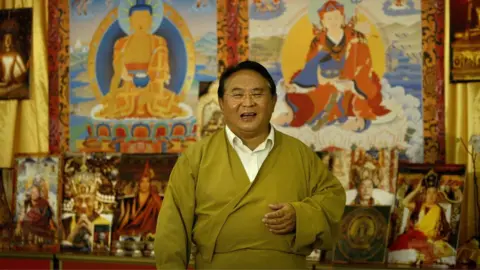
.jpg) | |
| Title | Rinpoche |
| Personal life | |
| Born | Sonam Gyaltsen Lakar 1947 |
| Died | 28 August 2019 (aged 72) Bangkok, Thailand |
| Religious life | |
| Religion | Tibetan Buddhism |
| School | Dzogchen, Nyingma |
| Senior posting | |
| Teacher | Jamyang Khyentse Chökyi Lodrö, Dudjom Rinpoche, Dilgo Khyentse Rinpoche, Nyoshul Khen Rinpoche |
88888888888888888888888888888888888888888888888888888888888888888888888888888888888888888888888888888888888888
"The most important thing is not to get trapped in what I see everywhere in the West, a "shopping mentality": shopping around from master to master, teaching to teaching, without any continuity or real, sustained dedication to any one discipline. Nearly all the great spiritual masters of all traditions agree that the essential thing is to master one way, one path to the truth, by following one tradition with all your heart and mind to the end of the spiritual journey. .... In Tibet we used to say: "Knowing one, you accomplish all." (11/26/2024)
88888888888888888888888888888888888888888888888888888888888888888888888888888888888888888888888888888888888888
Sogyal Rinpoche (Tibetan: བསོད་རྒྱལ་, Wylie: Bsod-rgyal; 1947 – 28 August 2019) was a Tibetan Dzogchen lama. He was recognized as the incarnation of a Tibetan master and visionary saint of the 20th century, Tertön Sogyal Lerab Lingpa. Sogyal Rinpoche was the founder and former spiritual director of Rigpa — an international network of over 100 Buddhist centres and groups in 23 countries around the world — and the author of the best-selling book The Tibetan Book of Living and Dying, which has been printed in 30 languages and 56 countries.[1] Before his retirement, in the wake of abuse allegations in 2017,[2] he had been teaching for 40 years in Europe, America, Asia and Australia.[3]
Sogyal Rinpoche had been accused of sexual and physical assault and abuse, as well as misusing charitable funds, with allegations stretching back to the 1970s.[4][5] In 2017, Rigpa announced these allegations would be investigated by an outside party and a report has now been published, upholding most of the allegations.[6] Sogyal Rinpoche did not respond to the report but stated that "I am clear in my own mind that I have never, ever, acted towards anyone with a motive of selfish gain or harmful intent."[7]
Life
Early life and education
Sogyal Rinpoche was born Sonam Gyaltsen Lakar in 1947 in what the Tibetans called the Trehor region of Kham, Tibet.[8] According to his mother, the patron of his courtesan aunt and de facto stepfather, Jamyang Khyentse Chökyi Lodrö, recognized him as the incarnation of Tertön Sogyal and supervised his education at Dzongsar Monastery.[9] He studied traditional subjects with several tutors, including Khenpo Appey, who was appointed as his tutor by Dzongsar Khyentse Chökyi Lodrö.[9][10]
Sogyal Rinpoche attended a Catholic school in Kalimpong, India and then studied at Delhi University in India's capital before coming to the West. In 1971, he was granted a place to study comparative religion at Trinity College, Cambridge as a visiting scholar.[11] He continued to study with many masters, of all schools of Tibetan Buddhism, especially Dudjom Rinpoche, Dilgo Khyentse Rinpoche, and Nyoshul Khenpo Rinpoche.[12] He first began to translate for Dudjom Rinpoche in Kalimpong in India[13] and later continued in the role of his translator in Europe and during a tour of the United States.[14] In 1973 he assisted in organizing the Dalai Lama's first visit to the West in Rome, which included an audience with Pope Paul VI.[7]
Teaching and establishing Rigpa
Sogyal Rinpoche began to teach in London in 1974. His centre, a house in Kilburn, was originally called Orgyen Chöling. The name later changed to Dzogchen Orgyen Chöling. Dudjom Rinpoche also asked Sogyal Rinpoche to take care of his centre in Rue Burq, Paris, which opened in 1978.[citation needed] In 1979, Sogyal Rinpoche chose the name Rigpa—the innermost, essential nature of mind—for his work.[15]
Rigpa soon established an annual schedule of longer seminars, referred to as retreats, with Sogyal Rinpoche and other teachers leading events in France in the summer, California at Thanksgiving, Germany in Winter, followed by Myall Lakes in Australia, and then England at Easter.[citation needed] The first winter event at Kirchheim in Germany took place in December 1986,[16] annual retreats in Tiona Park in Australia began in 1989, and the first Thanksgiving retreat in the US was in Oakland in 1988.[citation needed]
In 1987, Rinpoche was invited to become spiritual director of the centre in County Cork in the west of Ireland which was to become Dzogchen Beara, Rigpa's first long-term retreat facility.[17] In 1991, Sogyal Rinpoche founded the retreat centre of Lerab Ling near Montpellier in southern France. The first three-month retreat was held there in 1992.[18] A centre in Berlin named Dharma Mati was formally opened in October 2007.[citation needed]
On 11 August 2017, following allegations of physical, emotional and sexual abuse from current and ex-members of Rigpa, Sogyal Rinpoche "decided, with immediate effect, to retire as spiritual director from all the organizations that bear the name of Rigpa in different countries around the world".[2]
The Tibetan Book of Living and Dying
In 1983, Rinpoche met Elizabeth Kübler-Ross, Kenneth Ring and other figures in the caring professions and near-death research, and they encouraged him to develop his work in opening up the Tibetan teachings on death and helping the dying.[citation needed] Rinpoche continued to teach throughout the world. Then, in 1989 in Nepal, Rinpoche met Andrew Harvey and invited him to help on the project.[19] About the writing process, co-editor Patrick Gaffney said, "Probably, a book has never been written in such an unusual way."[19]
The Tibetan Book of Living and Dying was first launched in the United States in September 1992, where it received high acclaim and spent several weeks at the top of the bestseller lists.[20] It was subsequently released in the United Kingdom, Australia and India, and first translated into German and French. To date, more than two million copies have been printed in 30 languages and 56 countries.[21]
Conferences and events
Rinpoche was a regular speaker at conferences around the world, addressing topics such as Buddhism in the modern world, death and dying, meditation and happiness. In 2004, he served as a keynote speaker at the Parliament of the World's Religions, where over 8,000 religious leaders and lay people gathered in Barcelona in Spain to discuss the issues of religious violence, access to safe water, the fate of refugees worldwide, and the elimination of developing countries' debts.[22] In August 2008 he joined Robert Thurman at the Aspen Institute in Aspen, Colorado, to speak about "Tibet’s Unique Buddhist Heritage" as part of a symposium called "His Holiness the Dalai Lama at Aspen: A Celebration of Tibetan Culture", organized jointly with the Conservancy for Tibetan Art and Culture.[23] In October 2010 he gave a keynote speech on "Tibetan Buddhism in Modern Western Culture" at the International Conference on Tibetan Buddhism held at Emory University.[24] In 2011, he was a keynote speaker and participant in the Global Buddhist Congregation in Delhi which brought together "religious, spiritual and world leaders, as well as 800 scholars, delegates and observers from 32 countries."[25] "The goal was to examine both the capacity and the resilience of Buddhism to engage with the most pressing concerns of the modern world, namely violence, social and economic disparity, environmental degradation and discord between and within communities and nations" and "to contribute to cultivating and fostering peace, harmony, co-existence and a shared responsibility amidst the diversity of cultures, communities and nations."[25] In 2012, he was a keynote speaker at the Happiness and Its Causes conference in Sydney.[26]
In the East

Rinpoche taught regularly in India, especially in Delhi at the Foundation for Universal Responsibility of His Holiness the Dalai Lama.[27] He also taught in the Himalayan regions of Sikkim, where he lived for part of his childhood, and Bhutan. He had been teaching annually in Bhutan since 2007 and his teachings were regularly shown on television there.[28] The first Prime Minister of Bhutan and champion of its philosophy of Gross National Happiness, Lyonchen Jigme Yoser Thinley, regularly attended Rinpoche's teachings.[29] Sogyal Rinpoche said that he decided to make teaching in Bhutan a priority since it is the only remaining independent Vajrayana Buddhist country in the world. He also said that "today’s younger generation in the Himalayan region needed to understand the Dharma in a practical way" and that "understanding the Dharma in a real way is an important and integral part of the development of Bhutan."[29]
In 1998, Rinpoche was formally offered the throne of Tertön Sogyal's home monastery in Tibet, Kalzang Monastery, by the abbot, Sherab Özer Rinpoche, in a ceremony in France.[30]
Death
Sogyal Rinpoche died, aged 72, of a pulmonary embolism on 28 August 2019 in Thailand[31] where he was being treated for colorectal cancer.[7]
Teaching
According to Stephen Batchelor, Sogyal Rinpoche "is known for his sense of humour, indefatigable energy, forthrightness and periodic eccentricity."[11] In his teachings, he often focused on the Buddhist understanding of the mind, and what is known in the Tibetan tradition as the nature of mind, pristine awareness or rigpa, along with meditation as a means for ultimately realizing the nature of mind. Other common topics were death and dying, which is one of the main themes of his book, "The Tibetan Book of Living and Dying".
In what he saw as a continuation of the non-sectarian Rimé (Tib. ris med) movement, which rose to prominence in eastern Tibet in the nineteenth century, he frequently referred to teachings of all Tibetan traditions, and also quoted from non-Tibetan sources, such as the Dhammapada,[32] and teachers belonging to other traditions such as the Zen master, Shunryu Suzuki.[33] He wrote:
Rinpoche liked to recount stories of his own teachers and to stress the importance of devotion, often quoting Dilgo Khyentse Rinpoche, who said, "Devotion is the essence of the path."[35] Still, according to Charles Tart, he "encourages his students to direct their devotion toward his teachers rather than toward him personally, even though most of Tibetan Buddhism puts tremendous emphasis on devotion towards one's teacher."[36]
Abuse allegations
In 1994, a $10 million civil lawsuit was filed against Sogyal Rinpoche.[37] It was alleged that he had used his position as a spiritual leader to induce one of his female students to have sexual relations with him. The complaint included accusations of infliction of emotional distress, breach of fiduciary duty, as well as assault and battery.[38][39] The lawsuit was settled out of court.
In 2011, related allegations were introduced by journalist Mary Finnigan, who was also the main author of the original article in 1995.[40][41]
In 2014, Marion Dapsance reported on her seven-year investigation of Sogyal Rinpoche.[42][43] The experiences of one of her respondents, "Mimi", a long-term female attendant of Sogyal Rinpoche, were also published in 2016 in l'Obs detailing the sexual and psychological abuse she and her fellow-attendants endured.[44][45] Another victim of Sogyal Rinpoche spoke out in the Dutch current affairs program Brandpunt on 13 June 2017.[46][47][48]
On 20 July 2017, Buddhist publication Lion's Roar published an article with excerpts from a letter written and sent to Sogyal Rinpoche by current and former senior Rigpa students, filled with details of accusations.[49][50] The eight students were all long-serving Rigpa members, many holding senior positions within the Rigpa organization, including directors, a former board member, and personal assistants to Sogyal Rinpoche. The twelve page letter, dated 14 July 2017, explicitly describes sexual, physical, and emotional abuse by Sogyal Rinpoche of Rigpa students, extending over a long period. It states that they have been beaten severely, were asked to perform sexual acts and lie in order to conceal Sogyal's misbehavior. The letter also describes that Sogyal has a lavish and indulgent lifestyle, and depicts a cavalier use of donations to support this lifestyle, and a tyrannical and abusive manner towards those who worked closely with him and who were often key in managing the Rigpa organization.[49][50]
The letter also states that the public face of Sogyal Rinpoche was carefully crafted and managed to promote a person who was wise, compassionate, and virtually infallible, an image which was greatly at odds with the private Sogyal Rinpoche, whose abusive and narcissistic personality and deeds were kept hidden at great effort from the public and the wider Rigpa sangha by his inner circle.[49][50]
Matthieu Ricard, a close adviser to the Dalai Lama, has stated that Sogyal-Lakar's behaviour, as described in the letter, "is obviously unacceptable — from the point of view of ordinary morality, let alone that of Buddhist ethics. This is all the more so given the considerable suffering that has resulted from such actions".[51][52]
On 1 August 2017, at a conference held in Ladakh, India, the Dalai Lama addressed the issue of misconduct in Buddhist communities, saying "Sogyal Rinpoche, my very good friend. Now he is disgraced."[53] This criticism was extended to Rigpa's organisation during an interaction with students from the University of California, San Diego, at his residence in Dharamsala on 6 September 2017.[54]
On 3 August 2017, the French Buddhist Union (L’Union Bouddhiste de France) suspended the membership of Rigpa France and its Rigpa Lérab Ling Centre,[55] and lifted the suspension in 2019.[56]
On 11 August 2017, Sogyal retired from his position as Rigpa's spiritual director in the wake of the abuse allegations.[citation needed]
On 5 September 2018, Rigpa released the report produced by the investigation of UK law firm Lewis Silkin LLP.[57]
Films and documentaries
Sogyal Rinpoche appeared in Bernardo Bertolucci's 1993 film Little Buddha in the role of Kenpo Tenzin.[58] He featured in Frank Cvitanovich's The Making of a Modern Mystic, made for the BBC in 1993.[59] He was also the subject of a documentary by German filmmaker Boris Penth called Sogyal Rinpoche: Ancient Wisdom for the Modern World (Mitgefühl, Weisheit und Humor), which includes interviews with John Cleese and former Tibetan prime minister Samdhong Rinpoche.[60] It was premiered at the International Buddhist Film Festival in London in 2008[61] and shown in other film festivals around the world.[62] He is also featured in Sasha Meyerowitz's 2008 documentary Teachings on Milarepa.[63]
His alleged sexual and spiritual abuses are discussed in the 2022 German-French ARTE documentary, Buddhismus: Missbrauch im Namen der Erleuchtung ("Buddhism: Abuse in the name of enlightenment") by Elodie Emery and Wandrille Lanos.[64]
| Year | Title | Role | Notes |
|---|---|---|---|
| 1993 | Little Buddha | Kenpo Tenzin |
Publications
Books
- Sogyal Rinpoche (1990). Dzogchen and Padmasambhava (2nd ed.). Rigpa Publications. ISBN 0-9624884-0-2.
- Sogyal Rinpoche (1994). The Tibetan Book of Living and Dying. HarperCollins. ISBN 0-06-250834-2.
- Sogyal Rinpoche (1995). Glimpse After Glimpse: Daily Reflections on Living and Dying. Rider. ISBN 0-7126-6237-5.
- Sogyal Rinpoche (2002). The Future of Buddhism. Rider & Co. ISBN 0-7126-1564-4.
Articles and contributions
- Sogyal Rinpoche (2004). Ray, Reginald A. (ed.). The Pocket Tibetan Buddhist Reader. Boston, MA: Shambhala Publications. ISBN 1-57062-851-3.
- Sogyal Rinpoche (2004). "In the Mirror of Death". In Meeske, Kathryn (ed.). Sacred Voices of the Nyingma Masters. California: Padma Publishing. pp. 148–161. ISBN 1-881847-35-7.
- Sogyal Rinpoche (2005). "The Remembrance of Past Lives from the Tibetan Buddhist Perspective". In Cott, Jonathon (ed.). On the Sea of Memory: A Journey from Forgetting to Remembering. Random House. ISBN 1-4000-6058-3.
- Sogyal Rinpoche (2006). "Gift of Dharma". In Coburn, Brot (ed.). Himalaya: Personal Stories of Grandeur, Challenge and Hope. National Geographic Books. pp. 62–67. ISBN 978-0792261926.
- Sogyal Rinpoche (2012). "Sogyal Rinpoche". In Bradley, Rosalind (ed.). A World of Prayer: Spiritual Leaders, Activists, and Humanitarians Share their Favorite Prayers. Orbis Books. pp. 150–151. ISBN 978-1-57075-952-9.
- Sogyal Rinpoche (2012). "Tibetan Buddhism in Modern Western Culture". In Schuyler, Kathryn Goldman (ed.). Inner Peace—Global Impact: Tibetan Buddhism, Leadership, and Work. Information Age Publishing. ISBN 978-1-61735-918-7.
- Sogyal Rinpoche (2013). "Understanding the Mind and Meditation: A Buddhist Approach to Well-Being". In Fraser, Andy (ed.). The Healing Power of Meditation: Leading Experts on Buddhism, Psychology, and Medicine Explore the Health Benefits of Contemplative Practice. Shambhala Publications. pp. 3–17. ISBN 978-1611800593.
Forewords and introductions
- Longaker, Christine (1998), Facing Death and Finding Hope: A Guide to the Emotional and Spiritual Care of the Dying, Arrow Books, ISBN 0-09-917692-0
- Namdrol, Khenpo (1999), The Practice of Vajrakilaya, Snow Lion Publications, ISBN 1-55939-103-0
- Gyatso, Tenzin (2000), Dzogchen: The Heart Essence of the Great Perfection, Snow Lion Publications, ISBN 1-55939-219-3
- Tsoknyi Rinpoche (2003), Fearless Simplicity: The Dzogchen Way of Living Freely in a Complex World, Rangjung Yeshe Publications, ISBN 962-7341-48-7
- Farber, Don (2005), Portraits of Tibetan Buddhist Masters, University of California Press, ISBN 0-520-23973-3
- Nyoshul Khenpo Rinpoche; Barron, Richard (2005), A Marvelous Garland of Rare Gems: Biographies of Masters of Awareness in the Dzogchen Lineage (A Spiritual History of the Teachings on Natural Great Perfection), Padma Publications, ISBN 1-881847-41-1
- Tulku Urgyen Rinpoche (2005), Blazing Splendor: The Memoirs of Tulku Urgyen Rinpoche, North Atlantic Books, ISBN 962-7341-56-8
- Gyatso, Tenzin (2007), Mind in Comfort and Ease, Wisdom Publications, ISBN 978-0-86171-493-3
- Khyentse, Dilgo; Jinpa Palmo, Ani (2008), Brilliant Moon: The Autobiography of Dilgo Khyentse, Shambhala Publications, ISBN 978-1-59030-284-2
- Gerstein, Mordicai (2012), The Mountains of Tibet, Barefoot Books, ISBN 9781782850472
References
Citations
 |
- "Tibetan_Book_of_Living_and_Dying". 14 June 2007. Archived from the original on 14 June 2007.
- Sperry, Rod Meade (12 August 2017). "After allegations, Sogyal Rinpoche retires from Rigpa". Lion's Roar. Retrieved 5 September 2017.
- "Rigpa.org: Sogyal Rinpoche". Archived from the original on 1 July 2007.
- Brown, Mick (2 February 1995). "The Precious One". The Telegraph Magazine.
- Brown, Mick (21 September 2017). "Sexual assaults and violent rages... Inside the dark world of Buddhist teacher Sogyal Rinpoche". The Telegraph. ISSN 0307-1235. Retrieved 11 January 2018.
- "Rigpa Announces Plans for Independent Investigation of Abuse Allegations". WHAT NOW?. 12 August 2017. Retrieved 11 January 2018.
- Craig Lewis (28 August 2019). "Former Rigpa Head Sogyal Rinpoche Passes Away in Thailand". buddhistdoor.net. Retrieved 28 August 2019.
- Nyoshul Khenpo Jamyang Dorje (2005), A Marvelous Garland of Rare Gems: Biographies of Masters of Awareness in the Dzogchen Lineage, Padma Publications, p. 462
- Coleman, Graham (1993). A Handbook of Tibetan Culture. London: Rider. p. 217. ISBN 0-7126-5663-4.
- Khenpo, Nyoshul (2005). A Marvelous Garland of Rare Gems. California: Padma Publishing. pp. 462–3. ISBN 1-881847-41-1.
- Batchelor (1994), p. 76
- "Lotsawa House: Sogyal Rinpoche".
- Rinpoche, Sogyal (2002). The Tibetan Book of Living and Dying. New York: HarperCollins. ISBN 0-06-250834-2.
- Prebish, Charles S. (1999). Luminous Passage: The Practice and Study of Buddhism in America. Berkeley: University of California. pp. 43–44. ISBN 978-0-520-21697-6.
- "The History of Rigpa", The Rigpa Journal, volume 2
- "Rigpa Germany". Rigpa Wiki.
- "Home". Dzogchen Beara.
- "Lerab Ling - Home". www.lerabling.org.
- Patrick Gaffney (Summer 1994). "Finding the Voice". View Magazine.
- 'Best Sellers'. The New York Times Book Review. 3 January 1993
- "Tibetan lamas provide more nutritious 'chicken soup'". Retrieved 28 August 2019.
- "The Parliament of the World's Religions 2004". Archived from the original on 18 July 2004.
- "The Dalai Lama at Aspen: A Celebration of Tibetan Culture Video". The Aspen Institute. Archived from the original on 10 July 2010. Retrieved 28 April 2012.
- "ICTB Video". Archived from the original on 30 April 2012. Retrieved 2 May 2012.
- "Global Buddhist Congregation Context". Asoka Mission. Archived from the original on 18 April 2012. Retrieved 29 April 2012.
- Headspace | Happiness and Its Causes 2012 Archived 17 March 2012 at the Wayback Machine
- "Teachings on Buddhist Meditation by Sogyal RInpoche, 16th April, India Habitat Centre". Archived from the original on 16 April 2011. Retrieved 28 April 2012.
- "Rigpa | Bhutan TV teachings available".
- "The pursuit of happiness in a Buddhist vehicle". Kuenselonline. Retrieved 27 April 2012.
- Pistono, Matteo (2011). In the Shadow of the Buddha: Secret Journeys, Sacred Histories, and Spiritual Discovery in Tibet. New York: Dutton. p. 237. ISBN 978-0-525-95119-3.
- Littlefair, Sam (28 August 2019). "Buddhist teacher Sogyal Rinpoche dead, age 72 - Lion's Roar". Lions Roar.
- "'The Path to Happiness' A Dhamma Talk by Sogyal Rinpoche". BUDDHA DHYANA DANA REVIEW.
- "Essential Advice on Meditation". Rigpa San Francisco Bay Area. Archived from the original on 10 May 2012.
- Rinpoche, Sogyal (2003). The Spirit of Buddhism. HarperOne. pp. 3–4. ISBN 978-0-06-053995-5.
- Schmidt, Marcia (2004). Dzogchen Essentials: The Path That Clarifies Confusion. Hong Kong: Rangjung Yeshe Publications. p. 137. ISBN 978-962-7341-53-6.
- Tart (1994), p. 92
- Finnigan, Mary (10 January 1995). "Sexual healing". The Guardian. p. 19.
- Lattin, Don (10 November 1994). "Best-selling Buddhist author accused of sexual abuse". The San Francisco Free Press. Archived from the original on 15 April 2015. Retrieved 5 April 2015.
- Brown, Mick (2 February 1995). "The Precious One". Telegraph Magazine. pp. 20–29.
- Finnigan, Mary (1 July 2011). "Lama sex abuse claims call Buddhist taboos into question". The Guardian. Retrieved 5 April 2015.
- Monaghan, Gabrielle (12 June 2011). "Bad karma: Buddhist leader faces claims of sex exploitation made by woman who was asked to undress". The Sunday Times. p. 3.
- Marion Dapsance (2014), When fraud is part of a spiritual path ~ A Tibetan lama’s plays on reality and illusion.
- Marion Dapsance (2016), Submission, devotion and sexual abuse: my investigation of Buddhism in France
- ""Ferme la porte à clés." J'ai été dévouée à un grand maître bouddhiste, avant de m'enfuir - le Plus". leplus.nouvelobs.com.
- ""Lock the door." – I was devoted to a great Buddhist master, and then I quit". 1 December 2016.
- "Abuse in the Buddhist community: this victim tells her story for the first time". 21 June 2017.
- Brandpunt, Misbruik boeddhistische gemeenschap
- Boeddhistisch Dagblad (14 June 2017), Documentaire Brandpunt – Oana Bijlsma voelt zich slachtoffer van Sogyal rinpoche
- Sperry, Rod Meade; Littlefair, Sam (20 July 2017). "Letter to Sogyal Rinpoche from current and ex-Rigpa members details abuse allegations". Lion’s Roar.
- "Unedited Letter to Sogyal Laker from Rigpa Students, 14 July, 2017" (PDF).
- Elodie Emery, Scandale chez les bouddhistes : Matthieu Ricard recommande aux disciples plus de vigilance, Marianne, 28 July 2017.
- Matthieu Ricard, A point of view, Matthieu Ricard Blog, 29 July 2017.
- Dalaï Lama denounces ethical misconduct by Buddhist teachers, lionsroar.com, 8 August 2017.
- "Dalai Lama about Sogyal Rinpoche and Rigpa with students from the University of California". 6 September 2017. Archived from the original on 21 December 2021 – via www.youtube.com.
- Communiqué suite au scandale lié à Sogyal Rinpoché, UBF, 3 August 2017
- "Annuaire des membres". L'UBF : Fédération des Associations Bouddhistes de France (in French). Retrieved 3 November 2020..
- "Independent Investigation Report". Rigpa. Retrieved 18 February 2020.
- Little Buddha#Casting of Tibetan lamas
- "The Making of a Modern Mystic". spiritualityandpractice.com. Retrieved 28 April 2012.
- "Sogyal Rinpoche: Ancient Wisdom For The Modern World". BOS. Archived from the original on 4 November 2015. Retrieved 26 April 2012.
- "Sogyal Rinpoche: Ancient Wisdom for the modern world - Buddhist Film Festival Europe". bffe.org. Retrieved 2 October 2018.
- "Compassion, Wisdom and Humour". Retrieved 26 April 2012.
- Teachings on Milarepa. OCLC 276998181 – via WorldCat.
- "Buddhismus: Missbrauch im Namen der Erleuchtung - Die ganze Doku". ARTE (in German). Retrieved 27 September 2022.
Works cited
- Batchelor, Stephen (1994). The Awakening of the West. London: Aquarian. ISBN 1-85538-343-8.
- Tart, Charles T. (1994). Living the Mindful Life. Boston: Shambhala. ISBN 978-1-57062-003-
88888888888888888888888888888888888888888888888888888888888888888888888888888888888888888888888888888888888888
Contributions and Teachings
He authored The Tibetan Book of Living and Dying, a spiritual classic translated into 30 languages and distributed in 56 countries, widely used in both medical and educational contexts to guide end-of-life care and spiritual practice.
Controversies
Legacy
88888888888888888888888888888888888888888888888888888888888888888888888888888888888888888888888888888888888888
- "What is born will die, what has been gathered will be dispersed."
These quotes encapsulate Sogyal Rinpoche's insights into the nature of existence, the importance of meditation, and the profound understanding of life and death. They serve as a source of inspiration and reflection for those on a spiritual path.
88888888888888888888888888888888888888888888888888888888888888888888888888888888888888888888888888888888888888

888888888888888888888888888888888888888888888888888888888888888888888888888888888888888888888888888888888888888888888888888888888888888888888888888888888888888888888
Sogyal Rinpoche Dies; Tibetan Buddhist Lama Felled by Abuse Accusations
A friend of the Dalai Lama’s, he wrote a popular book about life, death and the afterlife that updated “The Tibetan Book of the Dead.”


Sogyal Rinpoche, a charismatic Tibetan Buddhist teacher and best-selling author who abruptly retired after several of his students accused him of multiple acts of sexual, physical and emotional abuse, died on Aug. 28 in a hospital in Thailand. He was in his early 70s.
The cause was a pulmonary embolism, his care team announced. He had received a diagnosis of colon cancer in September 2017.
Two months earlier, his reputation as a popular teacher of Buddhism and longtime friend of the Dalai Lama’s unraveled when eight students wrote a damning, heart-rending letter that outlined allegations of years of abuse by Sogyal Rinpoche against them.
“Why did you inflict violence upon us and our fellow Dharma brothers and sisters?” they wrote, describing incidents that had set him off, like his food not being hot enough, his assistant being inattentive or his girlfriends upsetting him. (Sogyal Rinpoche was not a monk.)
ADVERTISEMENT
“Your public face is one of kindness, humor, warmth and compassion,” they added, “but your private behavior, the way you conduct yourself behind the scenes, is deeply disturbing and unsettling.”
The letter led Sogyal Rinpoche to step down as the spiritual director of his organization, Rigpa, an international network of Buddhist learning centers, and enter a “period of retreat and reflection.”
How The Times decides who gets an obituary. There is no formula, scoring system or checklist in determining the news value of a life. We investigate, research and ask around before settling on our subjects. If you know of someone who might be a candidate for a Times obituary, please suggest it here.
The Dalai Lama rebuked him. “Now he is disgraced,” the Dalai Lama said.
Sogyal Rinpoche was born as Sonam Gyaltsen Lakar in 1947 in Kham, in eastern Tibet, and studied under various Tibetan Buddhist masters like Jamyang Khyentse Chökyi Lodrö.
After fleeing with his family to India from the occupying Chinese Army in 1955, he was educated in Catholic and Anglican schools. He left for England to study comparative religion at Trinity College, Cambridge, but did not graduate.
ADVERTISEMENT
Along the way, he merged the first two letters of his first name and first four letters of his middle name into Sogyal, and took on the surname Rinpoche, an honorific title for lama.

A compelling speaker who was fluent in English, Sogyal Rinpoche taught and gave seminars around the world and wrote “The Tibetan Book of Living and Dying” (1992), a best seller with a foreword by the Dalai Lama.
The book was Sogyal Rinpoche’s effort to update and expand “The Tibetan Book of the Dead,” an ancient religious text. In clear prose, he linked life, death and the afterlife, and detailed a path to enlightenment with meditation, generosity and strengthening one’s karma.
“Our state of mind at the time of death can influence the quality of our next rebirth,” he wrote. “So at the moment of death, in spite of the great variety of karmas we have accumulated, if we make a special effort to generate a virtuous state of mind, we may strengthen and activate a virtuous karma and so bring about a happy rebirth.”
In a review of the book in The New York Times, the religion writer Philip Zaleski praised Sogyal Rinpoche’s “attempts to unriddle life” and wrote that he had delivered a Tibetan version of “The Divine Comedy.”
ADVERTISEMENT
“One could imagine,” Mr. Zaleski wrote, “that this is what Dante might have written had he been a Buddhist metaphysician rather than a Christian poet.”
The book found a fan in the comic actor John Cleese, who helped narrate the audio version.
“What touches me most greatly about him is his humor,” Mr. Cleese said when he introduced Sogyal Rinpoche at an event in London in 1992. “I thought I could say a few words as a sort of incarnate lama’s warm-up man.”
Two years later, Sogyal Rinpoche had a supporting role as a monk in “Little Buddha” (1994), a film by Bernardo Bertolucci about an American boy believed to be the reincarnation of an important lama. Mr. Bertolucci called Sogyal Rinpoche a “fantastic writer,” in an interview with The Indianapolis Star.
And, Mr. Bertolucci said, “He’s so hysterical.”
But that year, a woman who identified herself only as Janice Doe filed a $10 million civil suit in Superior Court in California, accusing Sogyal Rinpoche of sexually and emotionally abusing her. They settled out of court.
More than two decades later, his students’ accusations prompted his organization, Rigpa, to hire a British law firm, Lewis Silkin, to investigate their claims. The investigation upheld much of what they had said and concluded that “senior individuals within Rigpa” had left students at risk by failing to address what they knew of Sogyal Rinpoche’s behavior.
ADVERTISEMENT
One student told the firm that Sogyal Rinpoche had beaten him more than 200 times over a four-year period. “If he was in a bad mood, he would beat me every day, or more than once a day,” the student was quoted as saying in the firm’s report. After a falling out with a girlfriend, he would “slam the door and punch me in the guts.”
Sogyal Rinpoche declined to be interviewed during the investigation. But in a letter that he sent to the investigator, he did not admit to abusing the students.
“I find it very hard to recognize myself in the descriptions in the letter and the picture that it paints,” he wrote. “It distresses me that my actions and intentions could have been misunderstood and characterized in this way.”
8888888888888888888888888888888888888888888888888888888888888888888888888888888888888888888888888888888888888888888888888888888888888888888888888888888888888888888888888888888888888888888888888888888888888888888888888888
Tibetan Buddhist teacher accused of sexual abuse dies
 Getty Images
Sogyal Lakar, a Tibetan Buddhist teacher accused of widespread physical and sexual abuse, has died aged 72.
Lakar, better known as Sogyal Rinpoche, sold millions of books and was widely seen as the best known Tibetan Buddhist teacher after the Dalai Lama.
But allegations of physical and sexual abuse followed Lakar, although he was never found guilty of any crimes.
An investigation commissioned by his group concluded that some followers were abused by him.
A statement on his Facebook page said that Lakar died in Thailand on Wednesday after suffering a pulmonary embolism. He had been receiving treatment for colon cancer.
Allow Facebook content?
Born in Tibet in 1947, Lakar was believed by many to be the incarnation of Tertön Sogyal Lerab Lingpa, a teacher of the 13th Dalai Lama.
He studied comparative religion at Cambridge University and went on to amass a huge following. His book, The Tibetan Book of Living and Dying, has sold more than 3 million copies.
But accusations of abusive behaviour followed Lakar.
In 1994 a woman filed a $10 million (£8.1 million) lawsuit against Lakar for sexual, mental and physical abuse. The case was settled out of court.
 Getty Images
His reputation came crashing down two years ago when further allegations emerged of his abusive behaviour.
An independent investigation by a lawyer commissioned by Rigpa, a Buddhist organisation started by Lakar, found that he had committed serious abuses.
"Some students ... have been subjected to serious physical, sexual and emotional abuse by him," the report stated, adding that senior members of the group failed to act despite being aware of the accusations.
Despite the allegations, many of Lakar's followers stayed loyal to him.
"I know he will continue to guide us with wisdom and most importantly his love," one follower wrote on Facebook after his death.
But Mary Finnigan, who helped launch Lakar's career in London in the 1970s and recently co-authored the book Sex and Violence in Tibetan Buddhism, told the BBC that he was a charismatic and abusive "cult leader".
"I sympathise with everyone who is bereaved by his passing but have to say that his death does not alter my feelings about his life," she said.
"He abused an ancient spiritual tradition in order to indulge his lust for power, money and sexual gratification."
88888888888888888888888888888888888888888888888888888888888888888888888888888888888888888888888888888888888888

No comments:
Post a Comment